Free Inquiry Now !

I spent last March driving around with a tape measure and a notepad, visiting four pool supply shops and two installers. Every single one gave me a completely different number for the same 16×32 rectangle. One shop quoted me $750. The guy across town said $2,800. A third wouldn’t even talk money without sending a crew to my house first.Sound familiar?That’s the problem with pool cover shopping. You Google “how much does a pool cover cost,” you get a $50 to $15,000 range, and you’re somehow supposed to make a decision from that. This guide is what I wish .
Here’s What You’re Actually Looking At
Most homeowners end up spending between $300 and $2,500 when everything’s done. But “pool cover” means three completely different products depending on who you ask. Let’s break it down properly.
| Cover Type | What You’ll Pay | What It Actually Does | The Real Downside |
|---|---|---|---|
| Solar blanket | $75 – $400 | Warms the water, cuts evaporation | Zero safety. You will hate wrestling it on and off. |
| Safety cover | $1,200 – $3,500 installed | Holds weight, keeps debris out, protects kids/pets | Manual labor every fall and spring. Not optional. |
| Automatic system | $8,000 – $15,000+ | Push a button. Done. | Price tag hurts. Maintenance isn’t free either. |
Solar Covers: The Gateway Drug
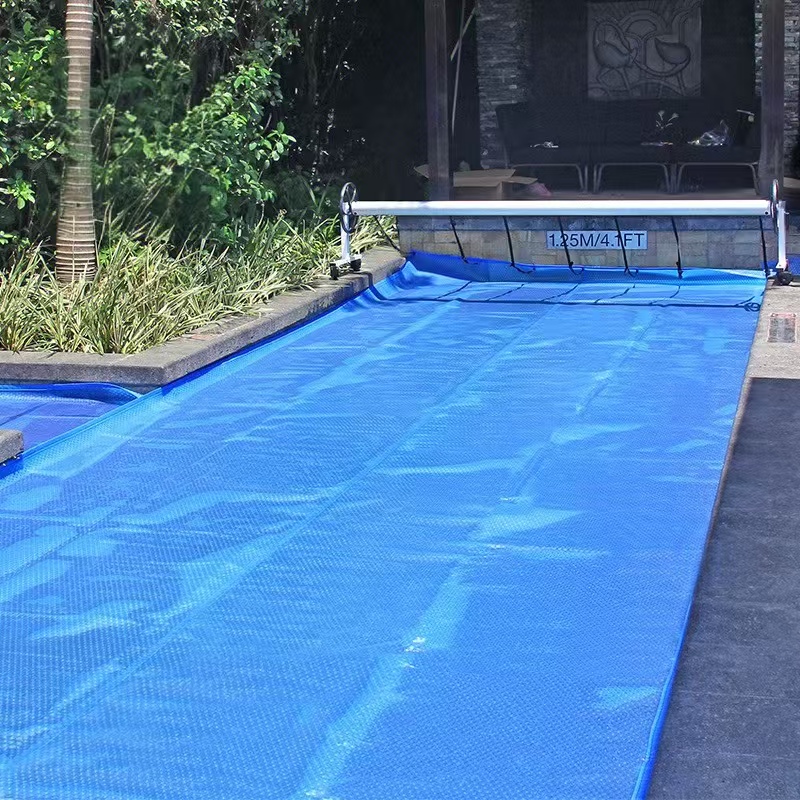
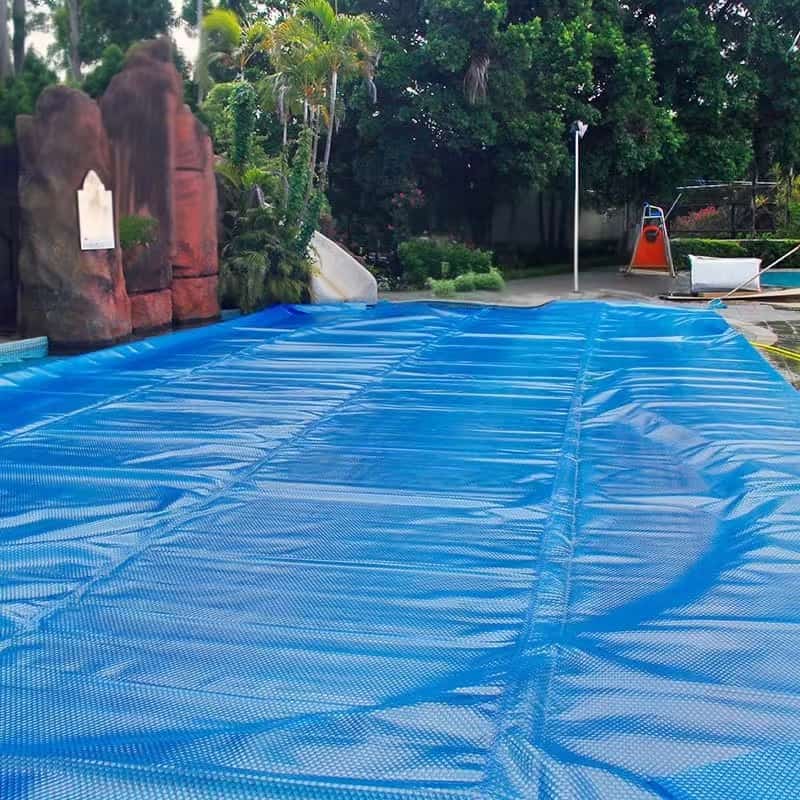
My first cover was a $130 solar blanket from the hardware store. Blue bubbles, 8-mil thickness, supposedly “heavy duty.” It worked fine for what it was—water stayed a few degrees warmer, I wasn’t topping off the pool every three days, and leaf cleanup dropped by half.
But here’s what the product description doesn’t mention: taking it off is a two-person job that ends with someone wet and annoyed. It sticks to itself, traps water underneath, and provides exactly zero protection if a kid or dog walks across it. I found a dead squirrel under mine once. That was fun.
What you actually get: Heat retention and evaporation control. Nothing else.
What kills it: UV exposure. Even the “premium” 12-mil and 16-mil versions start getting brittle after a couple seasons. Mine developed a tear in year two that slowly became a rip the size of my arm.
Who it’s for: If your pool is basically a summer toy and you just want to keep it cleaner and slightly warmer without dropping real money, this is fine. I still keep one around for April and October when I don’t feel like messing with the safety cover.
Real lifespan: 2 to 4 years if you’re careful. Store it out of sun when not in use. Good luck actually doing that.
Safety Covers: Where Most People Should Land
After my second solar blanket turned into confetti, I started looking at actual safety covers. The price jump stung—until I talked to Mike, a pool guy who’s been installing the same brand of mesh covers for fifteen years. He’s seen them last twelve years without issue.
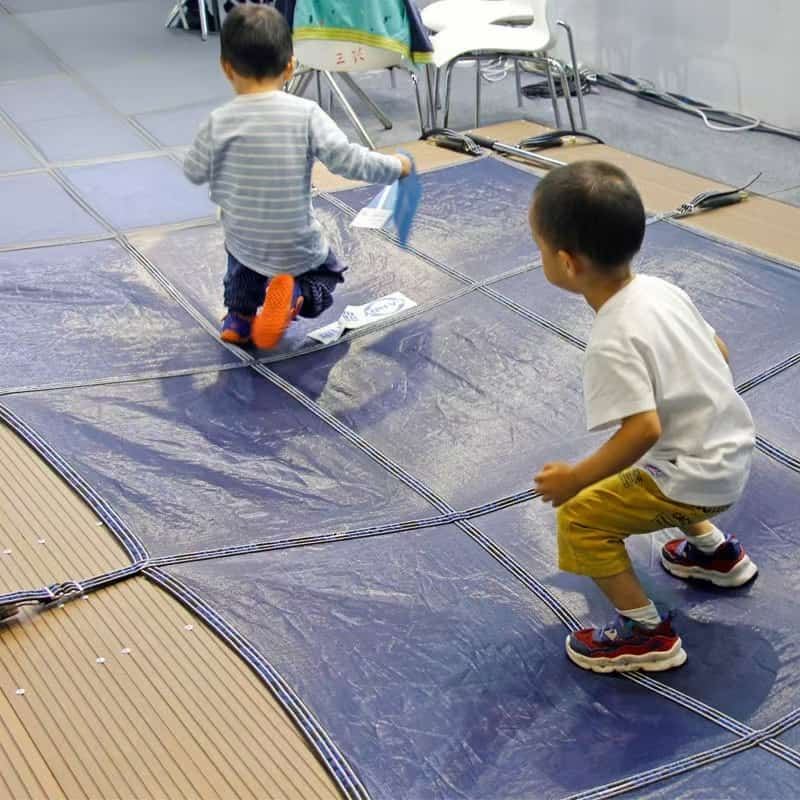
Safety covers anchor into your deck with brass fittings and spring-loaded straps. Installed right, they can support the weight of a couple adults. I’ve watched videos of deer walking across these things. More importantly, if your six-year-old wanders into the backyard in February, there’s something between them and the water.
Mesh vs. solid: This matters more than most people realize. Mesh drains water through—rain, melted snow, whatever—so you don’t have a swamp on top of your cover. Solid blocks 100% of sunlight, which means no algae growth underneath, but you need a pump sitting on top to clear standing water. Mesh runs $1,200–$2,500. Solid starts around $1,800 and climbs to $3,500+.
The installation reality: You’re drilling into concrete or pavers, setting brass anchors, and tensioning straps until the thing is drum-tight. Budget $500–$1,500 for a pro to handle it, or clear your calendar for a full Saturday if you’re handy and own a hammer drill.
How long they last: 7 to 12 years for mesh, 10 to 15 for solid vinyl. The warranty usually says 12 years. What actually happens depends on your sun exposure and whether a tree limb lands on it.
Who it’s for: If you have kids, pets, or you close your pool for more than a month at a time, this pays for itself. My neighbor opens his pool in April to water so clear he barely shocks it. Solid cover. Twelve years running.
Automatic Covers: The “Someday Maybe” Option
My brother-in-law put one in when he built his pool. Cost him just under $12,000. I thought he was out of his mind until I watched him close the pool in thirty seconds before a hailstorm while I was still dragging my safety cover out of the shed and cursing.
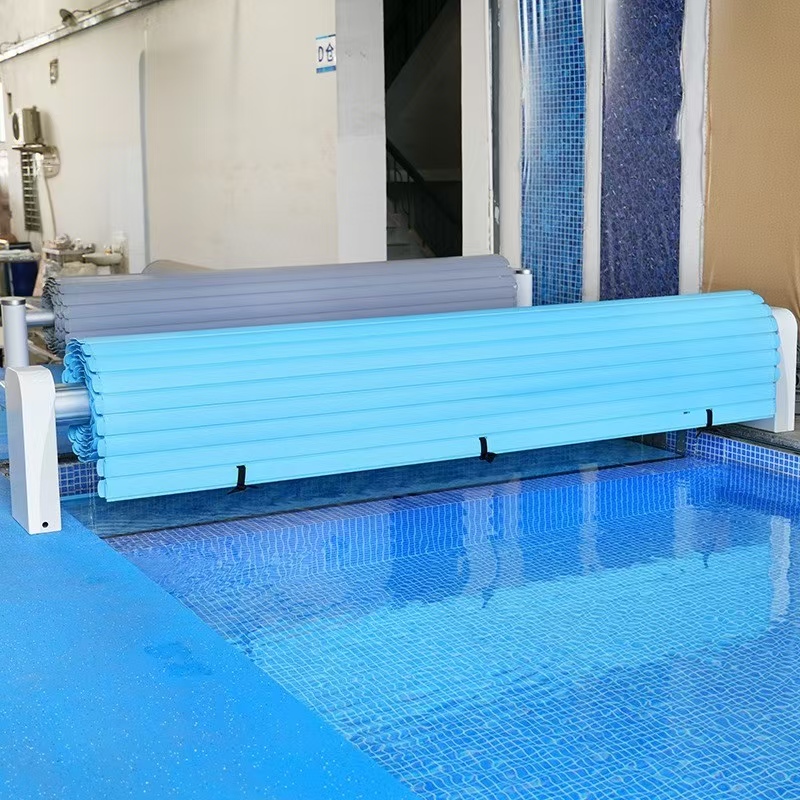
Automatic covers run on tracks along your pool edge. Hit a switch, cover rolls out. Hit it again, it disappears into a housing at one end. If you plan for it during construction, the tracks integrate into the coping and you barely notice them. Retrofitting an existing pool is messier and more expensive.
What you actually get: Convenience that changes how you use your pool. No more “ugh, I don’t feel like covering it.” You actually cover it every night, which means cleaner water, lower heating bills, and a safety barrier that’s deployed because it’s not a pain.
What they don’t tell you: Maintenance. The motor, the track alignment, the rope guides—something needs attention eventually. Budget $200–$800 per year. And if the motor dies in year eight, that’s a real conversation with your wallet. Also, they don’t play nice with freeform pools. Curves and steps everywhere? Good luck.
Real cost: $8,000 to $15,000+ if you’re building new and integrating from day one. Retrofitting an existing pool? Add 30–50% for coping work, electrical, and general headache.
Who it’s for: Daily pool users, people in high-energy-cost areas, or anyone building new who can plan ahead. For existing pools, the math only works if you’re already renovating and can roll it into that budget.
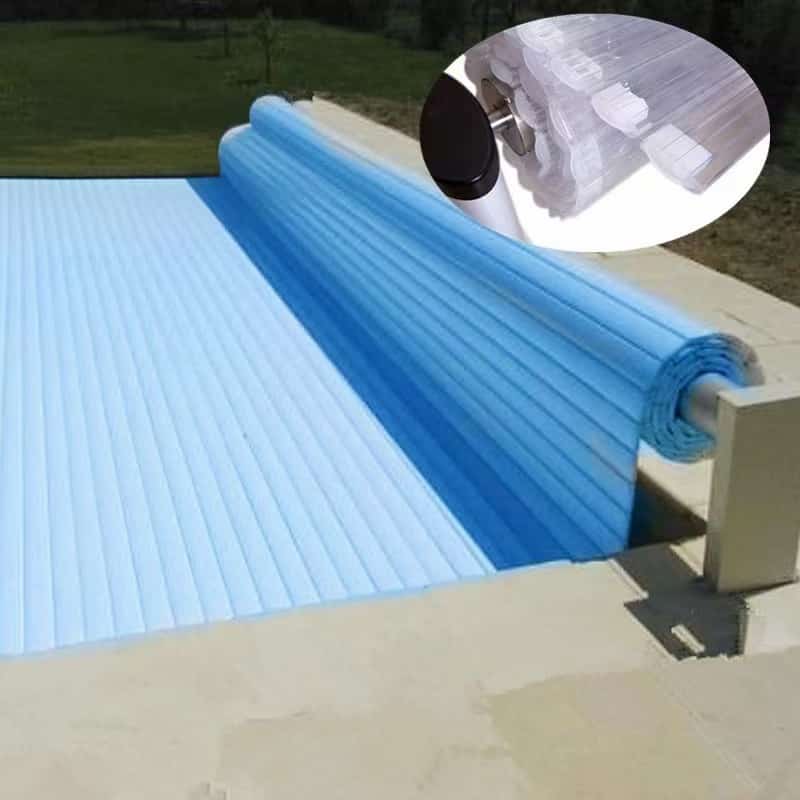
The Installation Cost Nobody Talks About Up Front
Here’s what I learned after getting actual quotes: the cover price and the “all-in” price are different animals.
- Solar blankets: Usually no install. You throw it on, trim with scissors, call it a day.
- Safety covers: Add $500–$1,500 for professional install. DIY is possible if you have a hammer drill, patience, and a free Saturday. Most people don’t.
- Automatic systems: Sometimes bundled, sometimes not. Retrofit install on an existing pool can run $2,000–$4,000 depending on deck demolition, electrical runs, and how much your installer charges to deal with your specific coping.
Weird pool layouts—multi-level decks, built-in water features, irregular shapes—add labor hours. Every anchor point, every track section, every custom angle costs something.
What Actually Moves the Price Needle
After talking to dealers in three states, here’s what actually matters:
- Material type. Bubble solar, mesh safety, solid vinyl, automatic fabric. Each step up roughly doubles your cost.
- Thickness or weight. Thicker solar covers, heavier mesh, reinforced vinyl. More material = more money = longer life.
- Pool geometry. Rectangles are cheap. Kidney shapes, L-shapes, freeforms with steps everywhere? Custom patterning, custom pricing.
- How it operates. Manual reel, spring anchors, motorized track. Convenience costs money.
- Standard vs. custom sizing. Off-the-shelf exists for common rectangles. Everything else gets measured, cut, and sewn to order.
Which One Should You Actually Buy?
I’ve owned two of the three types and helped a buddy install the third. Here’s my honest take:
Get a solar blanket if: You’re on a tight budget, you only need seasonal coverage, and safety isn’t a concern. It’s cheap enough that you won’t cry when it dies in three years. Just know what you’re signing up for.
Get a safety cover if: You close your pool for winter, you have kids or pets, or you’re sick of opening to green soup every spring. It’s the most practical upgrade most pool owners make. Mesh vs. solid depends on your climate—mesh drains through, solid blocks everything but needs a pump on top.
Get an automatic system if: You’re building new and can integrate it from day one, or you use your pool enough that manually covering it is actively annoying. It’s a luxury, but it’s one of those luxuries that changes behavior. You actually use it because it’s easy.
There’s no single “best” cover. There’s only what fits how you actually live with your pool.
How to Get a Real Quote (Instead of a Range)
Online price ranges stop being useful about five minutes into your search. If you want an actual number, have this ready before you call anyone:
- Exact dimensions: length, width, and any step, bench, or spa cutouts
- Shape: rectangle, kidney, freeform, L-shape, etc.
- Deck material and condition: concrete, pavers, wood—this affects how anchors go in
- What you actually need: safety, debris control, heat retention, convenience
- Photos from a few angles
Good dealers will give you a ballpark from photos, then a firm quote after measurements. Anyone pushing you to buy without seeing your pool is selling you a standard rectangle cover and hoping it fits.
The Questions Everyone Actually Asks Me
1.“How much for a 16×32 pool cover?”
Depends entirely on type. Solar: $180–$400. Safety cover installed: $1,800–$2,800. Automatic: $10,000–$14,000. Anyone giving you one number without asking what type is guessing.
2.“What’s the cheapest option that actually works?”
Basic 8-mil solar blanket, around $75–$150 depending on size. It’ll do the job for a couple seasons.
3.“How long do these things last in the real world?”
Solar: 2–4 years if stored properly. (You won’t store it properly.) Safety mesh: 7–12 years. Safety solid: 10–15 years. Automatic fabric: 7–10 years, mechanics 10–15 if maintained.
4.“Do I need custom?”
If your pool isn’t a perfect rectangle with standard dimensions, yes. Even rounded corners or a built-in step usually need custom work. An ill-fitting cover is worse than no cover—it gaps, traps debris, and wears out fast from stress points.
Conclusion
I spent way too long comparing solar blankets to automatic systems as if they were the same product. They’re not. It’s like comparing a tarp to a garage door.
Figure out what you actually need first. Safety? Convenience? Heat retention? Budget ceiling? Then shop within that lane. The numbers make sense once you’re comparing actual alternatives.
If you want to learn more about the pool cover cost ,please click here .