Free Inquiry Now !

Swimming Pool Bubble Cover: What Actually Holds Up After a Few Summers?
Most people don’t think much about a pool cover until they get tired of dealing with one.
Dragging a heavy, wet cover across the deck gets old pretty quickly. So does watching pool water disappear every week in the middle of summer. And if you’re heating the pool, the energy bill usually gets your attention sooner or later too.
That’s why bubble covers became so common in the first place. Not because they look impressive. Mostly because they solve a few annoying problems at once.
But after talking with pool contractors, distributors, and homeowners over the years, one thing becomes pretty obvious:
Some bubble covers last surprisingly well. Others start falling apart before the season is over.
And from the outside, they often look almost identical.
What a Bubble Pool Cover Actually Does
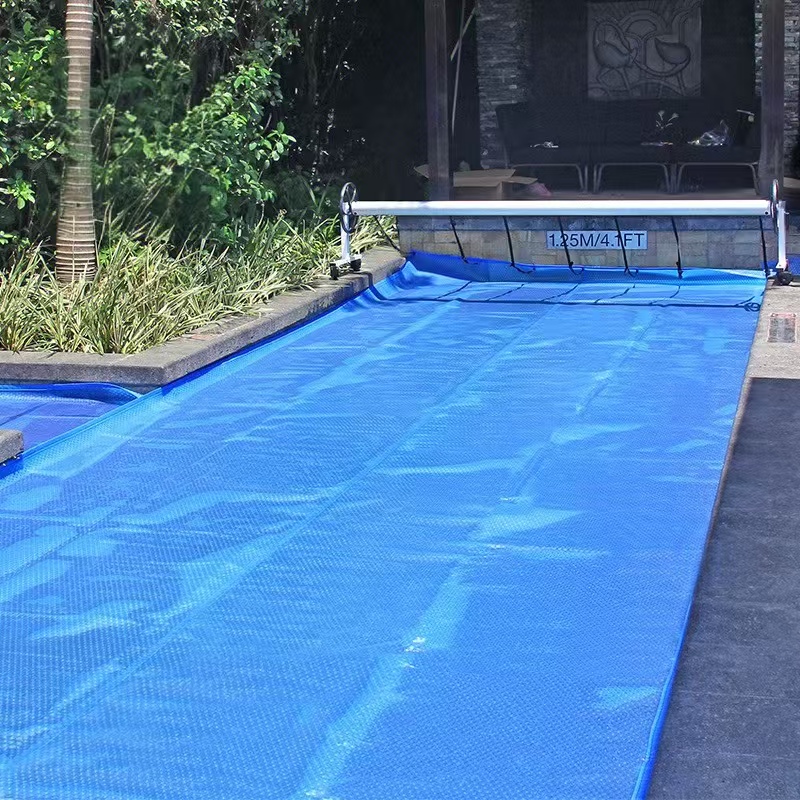
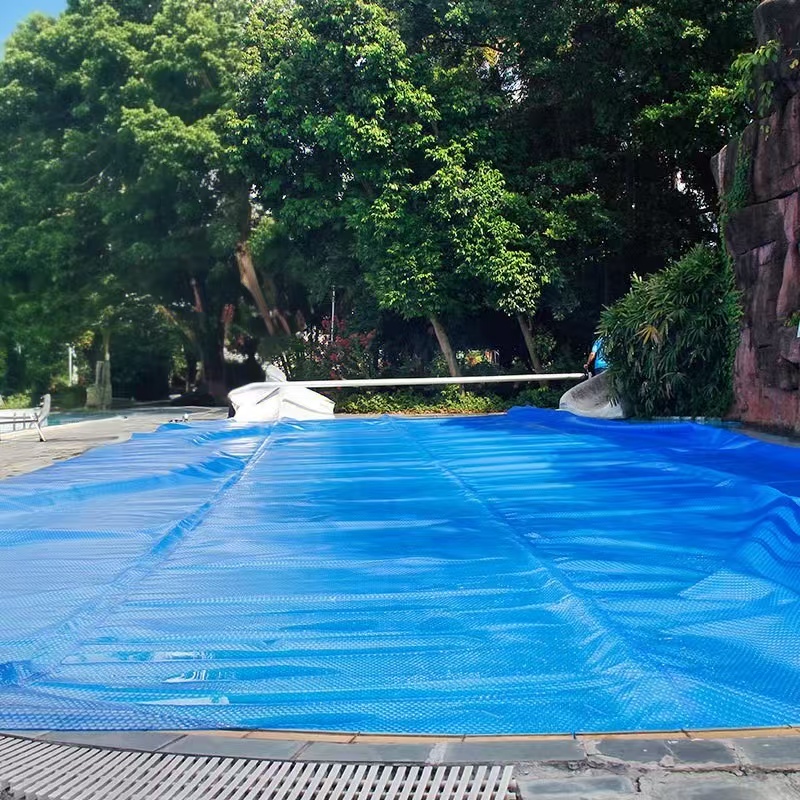
A swimming pool bubble cover — sometimes called a solar blanket or thermal pool cover — floats directly on the water surface.
The small air pockets trap heat during the day and slow heat loss at night. At the same time, the cover cuts down evaporation, which is where pools lose a huge amount of water.
That matters more than many pool owners realize.
In hotter places like Arizona, Florida, Australia, or Southern Europe, an uncovered pool can lose water constantly through evaporation. You refill more often, chemicals get thrown off balance faster, and heaters work harder than they need to.
A decent solar pool cover helps reduce all of that.
Not perfectly. But enough to notice.
The Biggest Difference Usually Comes Down to Material
This is where a lot of cheaper covers fail.
When a bubble cover is brand new, most of them look fine. The real test starts after months of UV exposure.
Low-grade material usually starts showing problems pretty fast:
- bubbles flattening
- plastic becoming brittle
- edges splitting
- discoloration
- tearing near stress points
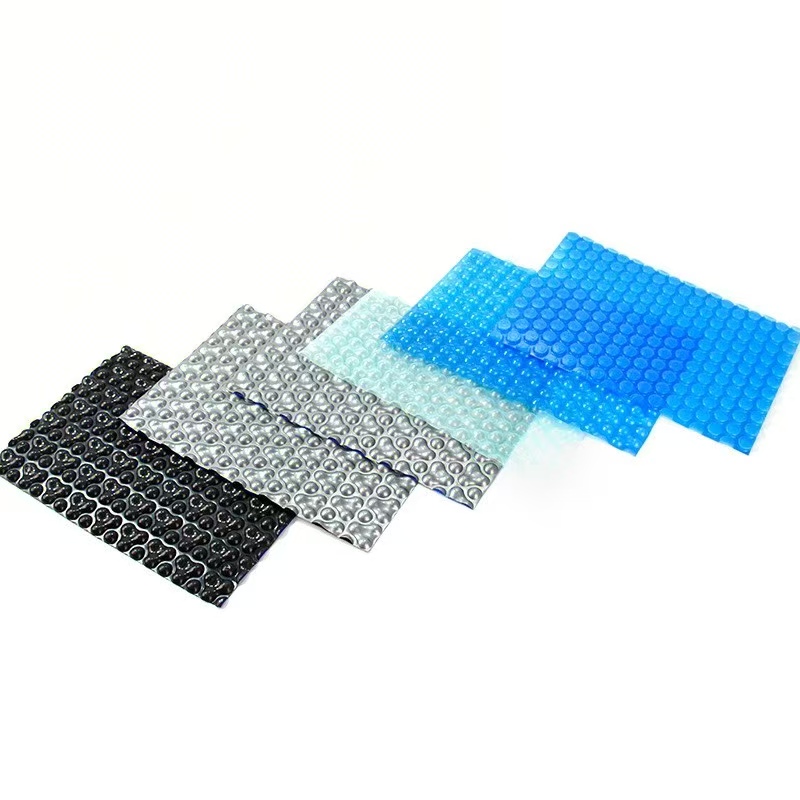
A lot of low-cost covers use thinner recycled material that simply doesn’t handle heat well long term.
That’s why UV-stabilized polyethylene matters so much, especially for outdoor pools with strong sun exposure.
People shopping only by price usually end up replacing covers more often.
400 Micron vs 500 Micron: The Difference Is More Noticeable Than You’d Think
On paper, the thickness difference doesn’t sound huge.
In real use, it matters.
A 400 micron bubble cover is lighter and easier to roll up. For smaller residential pools or seasonal use, it can work perfectly fine.
But in hotter climates, thinner covers usually age faster.
That’s why many commercial buyers prefer 500 micron covers instead. They’re heavier, but they tend to hold shape longer and resist UV damage better over time.
For pools that stay exposed year-round, thicker material usually ends up being the better long-term buy.
Especially if the pool gets used often.
Heat Retention Is Usually Better Than People Expect
A lot of homeowners buy a swimming pool bubble cover mainly to keep debris out.
Then they realize the bigger benefit is temperature retention.
Pool water loses heat very quickly overnight. Even after a sunny day, temperatures can drop more than expected by morning.
A thermal pool blanket slows that down.
If the pool already uses a heater or heat pump, the difference becomes even more noticeable because the heating system doesn’t need to work as hard every day.
For hotels, resorts, or larger residential pools, that can make a measurable difference in operating costs across a full season.
One Thing Many Buyers Overlook: Fit
Even good material performs poorly if the fit is wrong.
Oversized covers wrinkle, shift around, and leave gaps where evaporation still happens. Poor trimming also creates weak points that tear more easily when the cover is pulled across the water.
Custom-sized swimming pool bubble covers almost always perform better than generic cuts.
This becomes more important with irregular pool shapes or larger commercial installations.
Bubble Covers Aren’t Meant to Replace Safety Covers
This causes confusion sometimes.
A bubble pool cover is mainly designed for:
- heat retention
- evaporation reduction
- easier maintenance
It is not a safety cover.
For households with children or areas requiring safety compliance, a dedicated safety pool cover is still necessary.
The two products solve different problems.
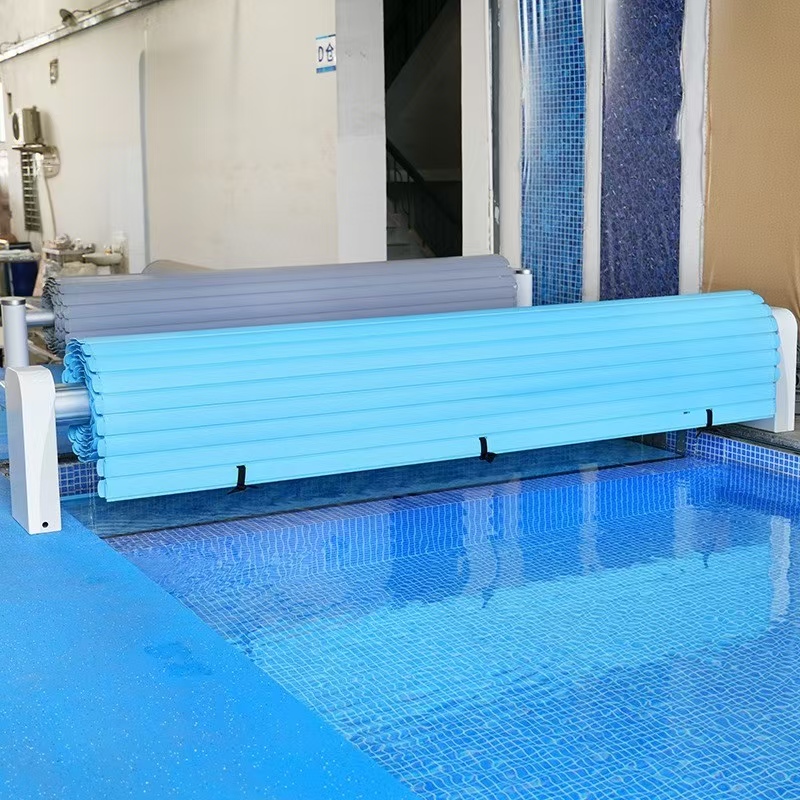
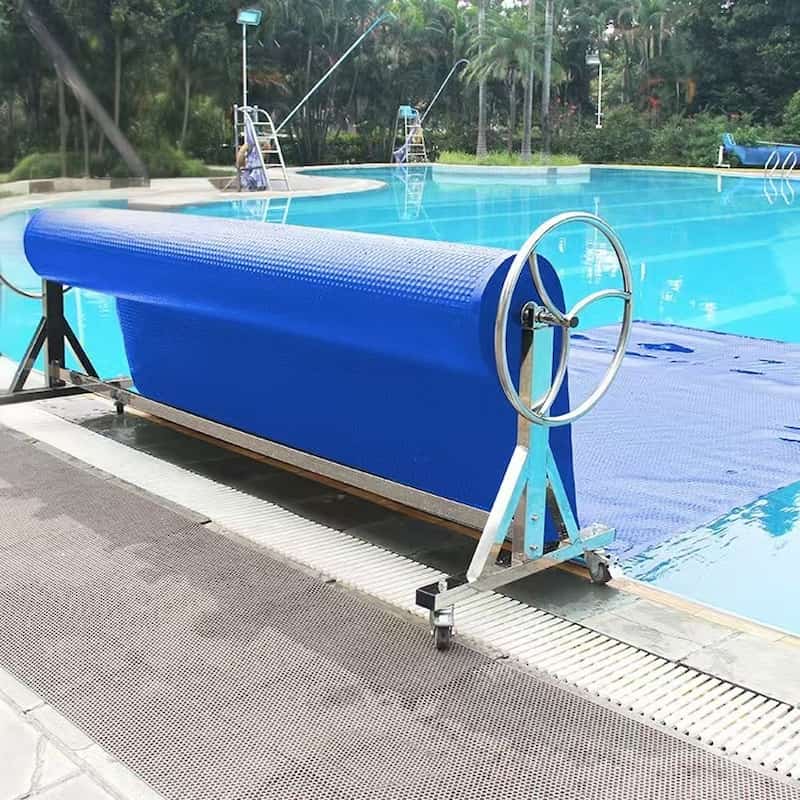
Why Pool Cover Reels Matter More on Larger Pools
Most people try handling the cover manually at first.Usually that works for a while.
Then the cover starts getting dragged across rough concrete, folded unevenly, or left sitting in direct sun beside the pool. That’s where damage starts.
A pool cover reel helps more than people expect because it reduces unnecessary stress on the material.
For larger pools especially, reels make daily use much easier and usually extend the life of the cover too.
Common Problems Buyers Run Into
“The bubbles flattened after one summer.â€
Usually material quality or UV resistance.
This is common with low-cost covers in high-temperature areas.
“The cover tears near the corners.â€
Often caused by pulling stress, poor trimming, or very thin material.
“It doesn’t keep the water warm enough.â€
Sometimes the issue is simply fit. Large gaps around the edges reduce insulation performance significantly.
What Serious Buyers Usually Pay Attention To
Homeowners often focus on price first.Distributors and contractors usually focus on consistency.
Because when you’re sourcing covers regularly, you start noticing the difference between products that merely look good in photos and products that actually survive outdoor use.
The manufacturers that tend to perform better long term usually offer:
- stable material quality
- proper UV stabilization
- consistent thickness
- custom sizing
- reliable production consistency